It’s 7:30 on a Friday night. Every table is full, the kitchen is firing on all cylinders – and your POS system just went dark. The walk-in cooler lost power twenty minutes ago, and your line cook is telling you the hood fan stopped working mid-service.
Sounds like a nightmare? For too many Los Angeles restaurant owners, this scenario is a very real memory. And almost always, it traces back to an electrical system that wasn’t built to handle the demands of a real commercial kitchen.
At DIGICO, we’ve spent over 17 years helping restaurants, hotels, and hospitality businesses across LA avoid exactly this kind of situation. Whether you’re building out a new space from scratch, renovating an existing location, or just trying to keep an aging system from letting you down – we’ve seen what works, and what doesn’t. In this guide, we’ll walk you through everything you need to know about restaurant electrical work in Los Angeles: from the initial installation to ongoing maintenance, and everything in between.
The Hidden Complexity Behind Every Restaurant Kitchen
Most people don’t think about electricity until something goes wrong. But a restaurant’s electrical system is one of the most complex and demanding of any commercial space – far more so than a retail store, office, or medical clinic of the same square footage.
Consider what’s running simultaneously in a typical commercial kitchen: a six-burner range with electric ignition, a convection oven pulling 240V, a commercial refrigerator, a walk-in cooler with its own dedicated compressor, a dishwasher, a hood exhaust system, heat lamps, and a grease trap alarm. That’s before you factor in the HVAC serving the dining room, the ambient lighting on a dimmer circuit, a full POS network, wall-mounted TVs, a sound system, and the Wi-Fi access points your customers expect to connect to within seconds of sitting down.
Each of those systems has its own amperage requirement. Many need their own dedicated circuit. All of them have to coexist safely within a panel and wiring infrastructure that was – ideally – designed with this exact load in mind. When it wasn’t, and in older Los Angeles buildings it often wasn’t, that’s when the trouble starts.
What California Code Actually Requires
In California, all commercial electrical work is governed by the California Electrical Code (CEC) – an adapted version of the National Electrical Code (NEC) with state-specific amendments. In Los Angeles, the Los Angeles Department of Building and Safety (LADBS) enforces these standards and requires permits for virtually all restaurant electrical work: new installations, panel upgrades, and significant circuit additions alike.
The stakes are real. According to the National Fire Protection Association (NFPA), cooking equipment is the leading cause of fires in commercial kitchens. While electrical failures are not the primary cause, faulty, overloaded, or poorly maintained electrical systems remain a significant and preventable fire risk in restaurant environments.
Restaurants are inherently high-risk environments, and electrical infrastructure can still become a critical point of failure when systems are not designed, maintained, or operated properly.
Understanding code requirements isn’t just about compliance – it’s about protecting your staff, your guests, your inventory, and the business you’ve worked hard to build.
What a Proper Restaurant Electrical Installation Looks Like
If you’re building out a new restaurant space – or taking over one that needs a gut renovation – the electrical installation phase is one of the most consequential decisions you’ll make. Get it right from the start, and your system will serve you reliably for years. Cut corners here, and you’ll be paying for it in emergency service calls, failed inspections, and equipment failures at the worst possible moments.
A proper restaurant electrical installation starts well before any wire gets pulled.
Step 1: Load Calculation
Before anything else, an experienced electrician needs to sit down with your complete equipment list and calculate the total electrical load your kitchen and dining room will demand. This determines the panel size, the service entrance rating required from the utility, and how many circuits need to be laid out – and where.
Most restaurant buildouts in Los Angeles require a 400- to 800-amp electrical service – far beyond what a typical office or retail space needs. Many older buildings in neighborhoods like Koreatown, Silver Lake, or Downtown LA were originally wired for much lighter commercial use. Upgrading the service entrance is often the first major task on any restaurant project, and it requires direct coordination with LADWP (the Los Angeles Department of Water and Power) as well as a permitted inspection through LADBS.
Step 2: Dedicated Circuits for Critical Equipment
Walk-in coolers, fire suppression systems, emergency lighting, and kitchen exhaust hoods each need their own dedicated circuits – never shared. Under California code, this isn’t optional. And it makes practical sense: a tripped breaker on a shared circuit shouldn’t be able to shut down your refrigeration and your exhaust at the same time.
Step 3: Bring the Electrician in Early
One of the most expensive mistakes restaurant owners make is bringing in the electrician after the architect has finalized the floor plan. By then, conduit routing becomes disruptive and costly to change. When the electrical contractor is part of the conversation from the beginning, they can coordinate with the mechanical engineer, the plumber, and the general contractor – ensuring every system has the space, access, and infrastructure it needs from day one.
Step 4: Don’t Overlook Low-Voltage Wiring
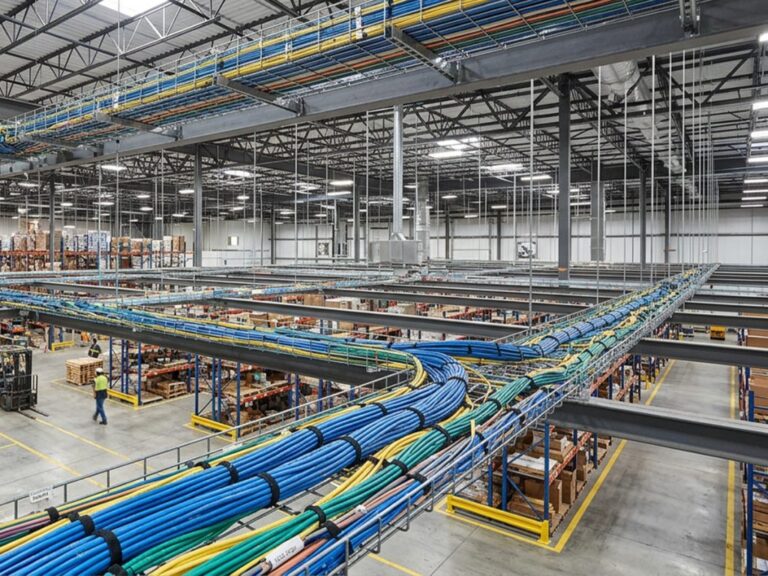
Beyond the power circuits, every modern restaurant needs a carefully planned low-voltage wiring infrastructure: structured cabling for the POS network, security cameras, access control for back-of-house areas, intercoms, and distributed audio and video for the dining room. These systems are often treated as an afterthought – run hastily through finished walls after the build is complete. That approach leads to messy, unreliable installations that are expensive to troubleshoot later.
At DIGICO, we plan and install low-voltage systems alongside the electrical rough-in, so everything is clean, documented, and accessible from day one.
Choosing the Right Electrical Wiring Installation Services for Your LA Restaurant
With any major commercial project, choosing the right contractor matters just as much as choosing the right design. Here’s what to look for – and what to watch out for – when evaluating electrical wiring installation services for a restaurant in Los Angeles.
Verify Licensing and Insurance First
In California, commercial electricians must hold a valid C-10 Electrical Contractor license issued by the Contractors State License Board (CSLB). You can verify any contractor’s license status online in minutes. They should also carry general liability insurance and workers’ compensation – without exception. If a contractor can’t produce proof of both, walk away.
Permits Are Non-Negotiable
This cannot be overstated: never work with a contractor who suggests skipping the permit process to save money or time. In Los Angeles, unpermitted electrical work puts your Certificate of Occupancy at risk, can invalidate your property insurance, and may require complete rework at your expense when it surfaces during a sale, inspection, or insurance claim. A reputable contractor will pull their own permits and manage the inspection process as part of the scope — not as an add-on.
Red Flags to Watch For
- Unusually low bids paired with vague or incomplete scopes of work
- Reluctance to provide references from comparable commercial projects
- No permanent business address or verifiable online presence
- Any suggestion that permits are “optional” or “not necessary for this type of work”
- No written contract with an itemized scope
Why Local Expertise in LA Specifically Matters
Los Angeles has considerations that other markets don’t. Seismic requirements affect how conduit is anchored and supported. Utility coordination timelines with LADWP differ from other California jurisdictions. And the Los Angeles Municipal Code includes electrical amendments that a contractor working primarily outside of LA may simply not know. That knowledge gap can translate into delays, failed inspections, and added cost that falls on you.
Don’t Wait for a Breakdown: The Case for Proactive Restaurant Electrical Maintenance
Here’s a truth that every experienced restaurant operator eventually learns: the electrical system is one area where reactive maintenance is almost always more expensive – and far more disruptive – than proactive maintenance.
Restaurant electrical maintenance isn’t just about fixing things when they break. It’s about identifying the signs that something is about to break, before it takes down your kitchen on a Saturday night.
What a Professional Maintenance Program Covers
A thorough electrical maintenance visit for a restaurant should include:
Panel inspection and thermal imaging. Infrared cameras detect hot spots at connections and breakers that indicate impending failure – long before any outage occurs. This is one of the most valuable tools in preventive electrical maintenance and something a visual inspection alone can’t replicate.
GFCI and AFCI outlet testing. Ground-fault and arc-fault circuit interrupters are your first line of defense against electrical fires and shock hazards. They degrade over time and need regular testing to confirm they’re actually functioning – not just present.
Equipment circuit load testing. As kitchens evolve – new equipment added, menu changes requiring more cooking capacity – circuits that were correctly sized at installation can become overtaxed. Load testing catches this before it becomes a failure.
Emergency lighting and exit sign testing. The California Office of the State Fire Marshal and LA Fire Department require these systems to function reliably during a power outage. Regular testing ensures you’re compliant and that your guests can exit safely when it matters.
Low-voltage system checks. POS cabling, security cameras, and access control systems should be inspected for degraded connections, outdated firmware, and coverage gaps – especially as equipment ages.
How Often Should a Restaurant Schedule Electrical Maintenance?
For high-volume kitchens operating six or seven days a week, quarterly inspections are the standard. Lower-volume operations may be well-served by semi-annual visits. The key is consistency. Electrical systems degrade gradually and quietly – the failure that shuts you down on a busy night usually had warning signs that went unnoticed weeks or months earlier.
Be Ready When the Inspector Knocks
The Los Angeles County Department of Public Health and the LA Fire Department both conduct inspections that involve electrical systems – exit lighting, hood suppression systems, refrigeration temperatures, emergency egress. A well-maintained electrical system means you’re always inspection-ready, not scrambling the week before a scheduled visit.
Smart Wiring for the Modern LA Restaurant
Today’s restaurant guests expect seamless technology from the moment they walk in: fast Wi-Fi, smooth payment processing, the right ambient sound, and a secure environment. Meeting those expectations requires a low-voltage infrastructure that’s been designed with intention – not improvised after the fact.
Structured Cabling for POS and Payments
Your point-of-sale system is the operational heartbeat of the restaurant. A properly installed Cat6 or Cat6A structured cabling system – with clean runs, labeled patch panels, and a managed network switch – provides reliability and straightforward troubleshooting when something does go wrong. Wireless-only POS setups are a single failed router away from a service disruption. Wired infrastructure is the backstop.
Security Camera Systems
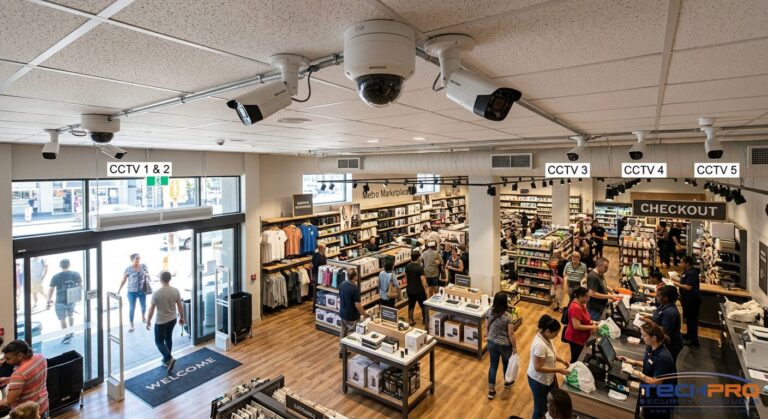
A well-designed camera system protects your staff, deters theft, and provides documentation when you need it. In restaurants, camera placement needs to cover kitchen access, entrances, bar areas, and cash handling zones – all while meeting California’s commercial privacy notification requirements. Getting this right requires planning, not guesswork.
Distributed Audio and Video
The right ambiance wiring – in-ceiling speakers with zone control, appropriately placed displays – enhances the guest experience and gives you flexible control over the room’s atmosphere throughout a shift. Done correctly, it’s invisible. Done as an afterthought, it’s a constant source of frustration.
When low-voltage systems are planned alongside the electrical rough-in, installations are cleaner, more reliable, and significantly easier to expand or modify as the business grows.
Why LA Restaurant Owners Trust DIGICO
Over 17 years in the Los Angeles market, DIGICO has built its reputation on one thing: showing up, doing the work right, and being the contractor that clients call back – and refer to their colleagues.
We work across the full range of LA hospitality: quick-service restaurants, fine dining concepts, hotel kitchens, ghost kitchens, food halls, and bars. Every project starts with a genuine conversation about what you’re building and what your system actually needs to support it – not a one-size-fits-all proposal put together before anyone’s walked the space.
We’re fully licensed (C-10), bonded, and insured. We pull our own permits, coordinate directly with LADBS and LADWP, and don’t sign off on a finished job until it’s passed inspection. Our service area covers Los Angeles from end to end – Hollywood, West Hollywood, Silver Lake, Koreatown, Downtown LA, Santa Monica, the San Fernando Valley, and beyond.
Recently, we completed a full electrical buildout for a 120-seat restaurant in Silver Lake: a 600-amp service upgrade, all kitchen circuits on dedicated runs, a full POS cabling infrastructure, and a 16-camera security system – all coordinated under one roof, on schedule, and under budget. That’s the kind of project that gets us out of bed in the morning.
Ready to Build or Upgrade? Here’s How to Get Started
Starting a conversation with a commercial electrician in Los Angeles is easier than most restaurant owners expect. Here’s what helps us give you the most accurate assessment from the first call:
- Square footage of the kitchen and dining areas
- Equipment list – particularly high-draw appliances like ovens, fryers, coolers, and HVAC
- Existing panel information, if you’re working within an existing space (size, age, current service rating)
- Target timeline for opening or completing the renovation
- Any prior inspection reports or outstanding code violation notices
From there, we’ll assess what the project actually requires, walk you through the permitting process, and put together a scope that covers everything – from the service entrance to the last camera on the wall.
Ready to talk about your restaurant project? Contact DIGICO for a free consultation with a licensed commercial electrician in Los Angeles. We’ll help you build a system your business can rely on – from opening day and for years to come.
FAQ
How much does restaurant electrical installation cost in Los Angeles?
Most restaurant electrical installations in Los Angeles range from $15,000 to $80,000+, depending on square footage, panel size, and whether a service upgrade is needed. A basic buildout starts around $15,000-$25,000; full-service projects with panel upgrades and low-voltage systems typically run $40,000-$80,000 or more. An accurate estimate requires a site visit and load assessment.
How often should a restaurant schedule electrical maintenance?
High-volume restaurants should schedule electrical maintenance quarterly. Lower-volume or seasonal operations can typically be managed with semi-annual inspections. Skipping years is the main risk – electrical systems degrade gradually and rarely fail with warning.
Do I need a permit for restaurant wiring in Los Angeles?
Yes. All commercial electrical work in Los Angeles requires a permit through LADBS – including new installations, panel upgrades, and circuit modifications. Unpermitted work risks your Certificate of Occupancy and voids insurance coverage.
What’s the difference between a commercial and residential electrician?
Commercial electricians are licensed for three-phase power, high-amperage service panels, and commercial code requirements. Restaurant electrical systems are far more complex than residential – hiring a residential electrician for a commercial kitchen buildout is a common and costly mistake.
Can one contractor handle both electrical and low-voltage wiring?
Yes. DIGICO handles both under one contract – power circuits and low-voltage systems including POS cabling, security cameras, and access control. Single-contractor coordination means fewer scheduling conflicts, cleaner installations, and one point of accountability.