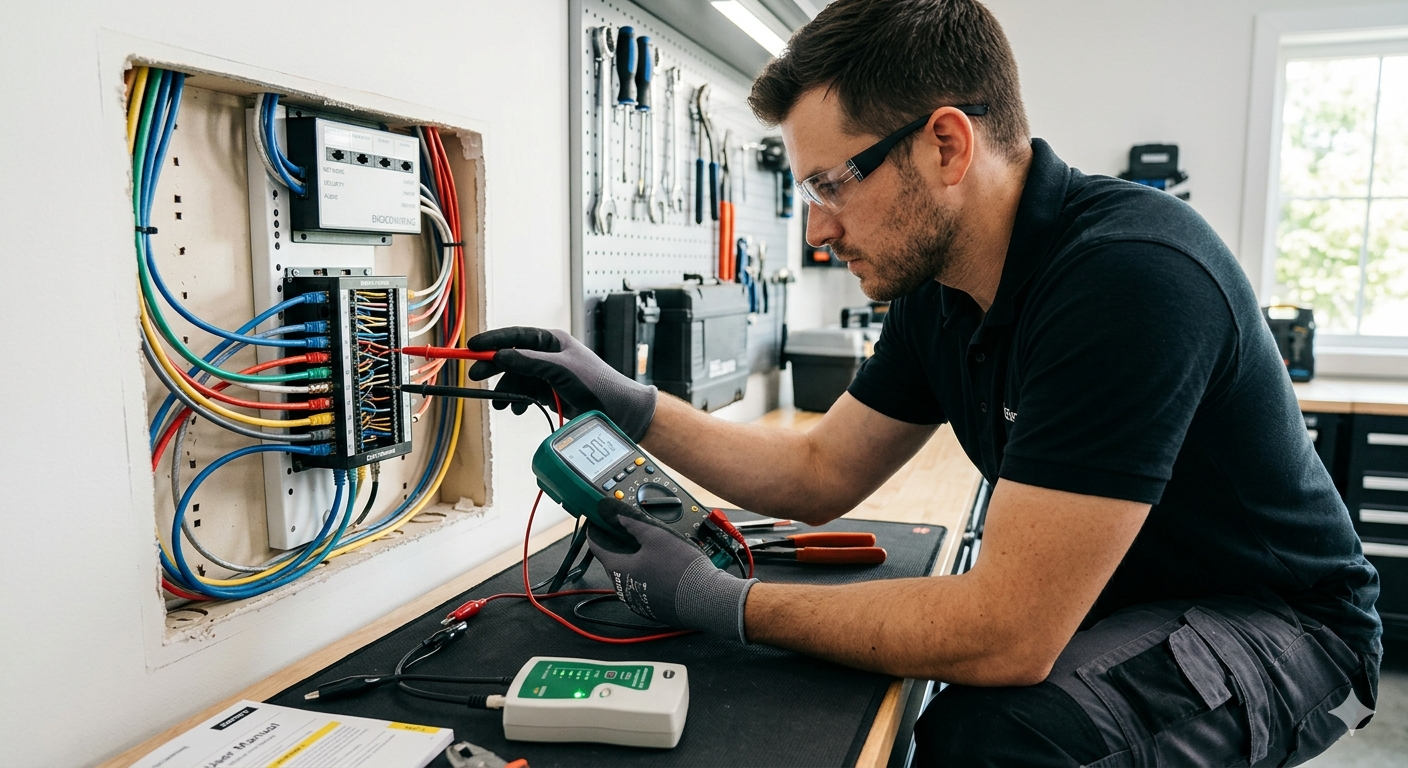
Low voltage systems are everywhere in modern homes and commercial buildings – from security cameras and smart thermostats to HVAC controls and landscape lighting. When these systems work correctly, they feel almost invisible. But when something goes wrong, even a small wiring issue can disrupt entire systems and lead to costly downtime.
That’s why understanding how to test low voltage wires correctly is not just a technical skill – it’s a practical necessity for anyone responsible for maintaining reliable electrical infrastructure.
In this guide, we’ll walk through a safe, structured approach to low voltage cable testing, explain the tools used in the field, and show how professionals perform accurate circuit diagnostics without guesswork.
What Is Low Voltage Wiring and Why Proper Testing Matters
Low voltage wiring typically refers to electrical systems operating at 50 volts or less, commonly used for control, communication, and security applications. These systems power everything from doorbells and access control systems to data networks and smart home devices.
According to the National Fire Protection Association (NFPA 70 / NEC), even low voltage installations must follow strict safety and installation guidelines to ensure reliability and prevent hazards.
In real-world environments, these systems are critical. Businesses rely on stable connectivity for security and operations, while homeowners depend on consistent performance for comfort and safety. A single wiring issue can lead to system failures that are often misdiagnosed or overlooked.
This is why proper low voltage troubleshooting is essential – not just reacting to failures, but identifying weak points before they become problems.
Essential Tools for Low Voltage Cable Testing
Accurate diagnostics always begin with the right tools. While experience plays a role, reliable results depend on proper instrumentation and methodical testing.
Multimeter (Primary Diagnostic Tool)
A multimeter is the foundation of voltage measurement in low voltage systems. It allows technicians to confirm whether circuits are delivering correct power levels and whether components are functioning within expected ranges.
In practice, professionals use it to:
- Measure DC voltage in control circuits
- Perform continuity checks on wiring runs
- Support basic and advanced circuit diagnostics
When you test low voltage with a multimeter, you’re not just confirming power – you’re validating system stability under real electrical conditions.
Cable Testers and Continuity Tools
For more complex systems, especially structured wiring, dedicated cable testers become essential. They help identify miswiring, signal degradation, or partial failures that a multimeter may not fully reveal.
These tools are especially useful for detailed cable inspection, where multiple conductors or long cable runs increase the chance of hidden faults.
Safety Equipment
Even though low voltage systems are generally safer than high-voltage installations, proper safety practices remain critical. The Occupational Safety and Health Administration (OSHA) emphasizes that electrical safety procedures apply to all voltage levels.
Basic protective equipment includes insulated tools, gloves, and proper workspace preparation to avoid accidental shorts or equipment damage.
Safety First: Best Practices Before You Begin
Before starting any safe low voltage cable testing, the first step is always preparation.
Whenever possible, power should be disconnected before testing. Even in low voltage environments, this reduces risk and prevents accidental damage to sensitive components like controllers and sensors.
A quick cable inspection should always be performed before touching any tools. Many issues – such as damaged insulation or loose terminals – are visible if you take the time to look carefully.
Following NEC safety recommendations and structured workflow habits ensures not only accurate results but also long-term system reliability.
Step-by-Step Guide: How to Test Low Voltage Wires
A structured approach is key to effective diagnostics. Skipping steps often leads to incomplete or misleading results.
Step 1: Visual Cable Inspection
Start with a full cable inspection, checking for:
- Physical damage or wear
- Corrosion on connectors
- Loose or poorly secured wiring
Many real-world failures begin here, long before electrical testing is needed.
Step 2: Voltage Measurement
Next, perform voltage measurement at key points in the circuit. This helps confirm whether power delivery matches system expectations.
Stable readings indicate healthy power flow, while drops or fluctuations may suggest wiring issues, overloads, or failing components.
Step 3: Test Low Voltage with Multimeter
At this stage, you test low voltage with a multimeter to validate both power and continuity across the system.
Correct probe placement and stable contact are critical. Inconsistent readings often point to wiring instability rather than device failure.
Step 4: Check Continuity
Continuity testing helps identify breaks or interruptions in wiring paths. This is a core part of circuit diagnostics, especially when dealing with hidden or buried cables.
A failed continuity test typically indicates a broken conductor or poor connection somewhere along the line.
Step 5: Analyze Results for Troubleshooting
Once all data is collected, it’s time for interpretation. This is where low voltage troubleshooting becomes critical.
Common findings include:
- Voltage drops → wiring or power supply issues
- No continuity → broken cable
- Normal readings but device failure → faulty equipment
The goal is not just to detect faults, but to understand their root cause.
Common Problems Found During Low Voltage Troubleshooting
Most system issues fall into predictable categories:
- Broken or frayed wiring
- Loose or unstable connections
- Voltage drops under load
- Signal interference or degradation
Each of these requires a slightly different diagnostic approach, which is why structured testing is so important.
Advanced Circuit Diagnostics Techniques
In more complex systems, basic testing is not enough.
Technicians often rely on tools like tone generators and signal tracers to map wiring paths and locate hidden faults. These tools are essential for advanced circuit diagnostics, especially in large commercial or multi-system environments.
Research and engineering standards from the Institute of Electrical and Electronics Engineers emphasize systematic analysis and repeatable measurement as the foundation of reliable electrical diagnostics.
When to Call a Professional
Some situations require expert intervention, especially when dealing with complex integrated systems or persistent failures.
If repeated low voltage troubleshooting does not resolve the issue, or if systems are mission-critical (security, access control, HVAC automation), professional diagnostics ensure accuracy and compliance with electrical standards.
Expert Tips for Accurate Testing
To improve accuracy in the field:
- Always verify readings more than once
- Test under load when possible
- Keep instruments calibrated
- Document findings for future reference
These small habits significantly improve long-term circuit diagnostics reliability.
Effective low voltage cable testing is about more than just tools – it’s about consistency, structure, and understanding how systems behave in real-world conditions.
By combining proper voltage measurement, careful cable inspection, and methodical circuit diagnostics, you can prevent many common failures before they turn into expensive repairs.
Most importantly, always follow recognized safety standards and treat even low voltage systems with the same level of discipline as any other electrical installation. That approach ensures not only better performance – but long-term reliability and peace of mind.
FAQ
What is low voltage wiring?
Low voltage wiring is electrical cabling that typically carries 50V or less, used in systems like security cameras, HVAC controls, smart homes, and landscape lighting.
How do you test low voltage wires safely?
Start by turning off power when possible, then perform a cable inspection, check voltage with a multimeter, and verify continuity to confirm the circuit is intact.
Can I test low voltage with a multimeter?
Yes. A multimeter is the primary tool for voltage measurement and continuity checks in low voltage systems. It helps confirm power levels and detect wiring issues.
What are common low voltage wiring problems?
The most common issues include broken wires, loose connections, voltage drops, and signal interference affecting system performance.
Why is my low voltage system not working?
It’s usually caused by wiring faults, poor connections, or voltage loss. Proper low voltage troubleshooting helps isolate whether the issue is in the cable, device, or power source.
Do low voltage systems still require safety precautions?
Yes. Even though voltage is lower, safe handling, proper tools, and correct testing procedures are essential for preventing damage and ensuring reliable operation.