At first glance, DIY low voltage wiring looks like a practical way to save money. Many homeowners and business owners assume that by handling the installation themselves, they can significantly reduce upfront costs while still achieving full control over their smart home, security, or network systems.
On paper, this approach seems reasonable. The materials are accessible, online guides are everywhere, and low voltage systems are often perceived as “simple.”
But in real-world applications, the situation is very different.
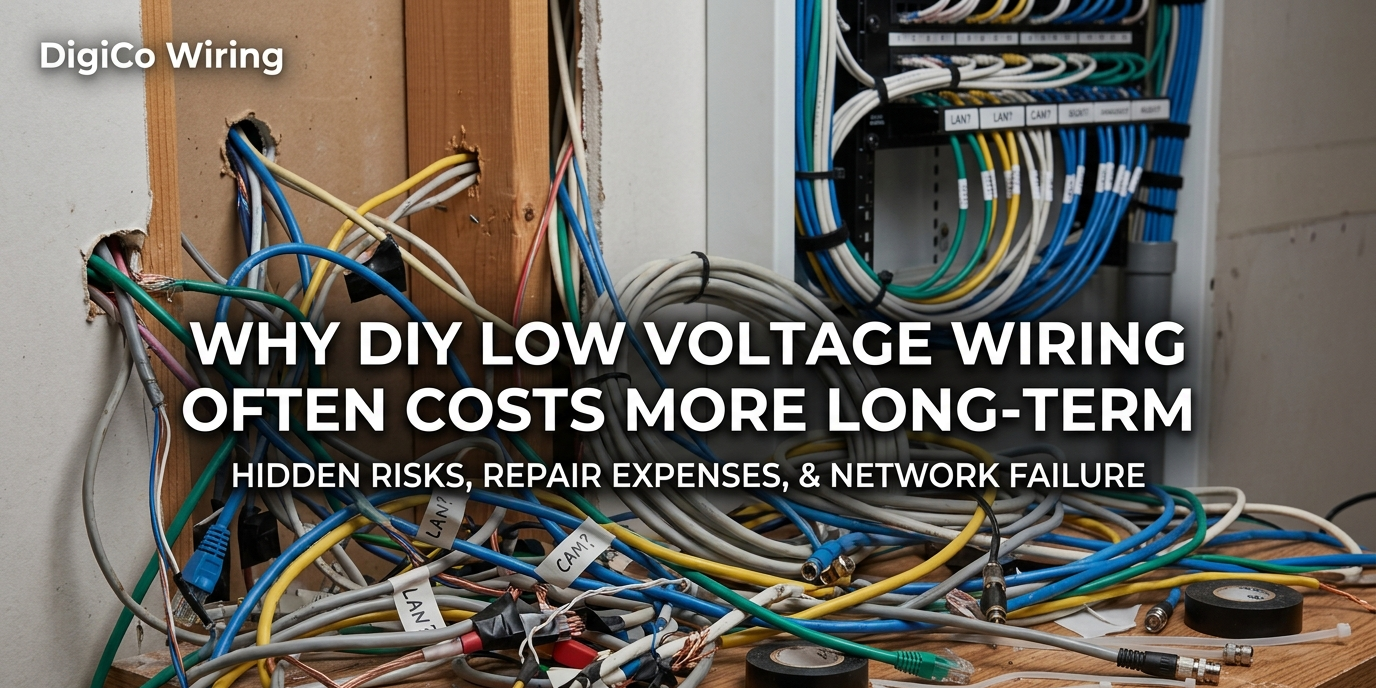
What we consistently see in the field is that DIY installations tend to introduce issues that don’t appear immediately. Systems may work on day one, but over time problems begin to surface – intermittent connections, unstable performance, and unexpected failures that require repeated troubleshooting.
This is where the true cost becomes visible. What looked like a lower low voltage wiring cost at the beginning often turns into a series of corrections, replacements, and service calls that exceed the price of professional installation.
Another important factor is that low voltage systems are rarely standalone. They are often part of larger ecosystems – security systems, HVAC controls, smart automation, or structured cabling. When one part is installed incorrectly, it can affect the entire system’s behavior.
And while low voltage is generally safer than standard electrical wiring, it still carries real electrical safety risks when handled incorrectly. Improper terminations, poor cable routing, or incorrect voltage handling can damage equipment or create unstable system behavior that becomes expensive to diagnose later.
The key issue is not whether DIY can technically work – it often does at first – but whether it remains reliable over time. And in most cases, that’s where the gap appears between expectation and reality.
The True Cost of DIY Low Voltage Wiring
When people start a DIY project, they usually focus on the visible part of the expense: materials and immediate installation. That’s where the idea of saving money comes from.
However, the real low voltage wiring cost is not defined at installation – it is defined over the full life of the system.
In professional environments, we often see that small installation inaccuracies slowly evolve into larger technical issues. A slightly loose connection or incorrect routing might not cause immediate failure, but under real operating conditions it leads to instability, signal loss, or inconsistent device behavior.
This is where DIY projects begin to accumulate hidden costs that are not obvious at first.
Upfront Savings vs Long-Term Reality
DIY reduces initial labor costs, but it often shifts the financial burden into the future.
Instead of a single properly engineered installation, the system requires repeated intervention – troubleshooting, adjustments, and partial rework. Over time, these corrections begin to exceed the original savings.
What initially felt like efficiency becomes fragmentation: multiple small costs instead of one controlled investment.
Hidden Costs That Appear Over Time
One of the most important realities in low voltage systems is that the most expensive problems are usually not visible at the beginning.
Rewiring is a common example. When wiring is not planned correctly or installed with proper standards, sections of the system often need to be redone entirely. This doubles both labor and material use.
Equipment damage is another frequent issue. Sensitive devices like cameras, controllers, and smart hubs can be permanently affected by unstable wiring conditions or incorrect voltage delivery. In many cases, the cost of replacing hardware alone exceeds what professional installation would have cost initially.
Finally, there is the cost of correction work. When professionals are eventually called in, a significant portion of their time is spent identifying and undoing previous mistakes before real repairs can even begin. That means the final bill is not just for fixing the system – it’s also for correcting the installation itself.
Common Mistakes in DIY Low Voltage Installations
Most DIY issues don’t come from lack of effort – they come from underestimating system complexity.
One of the most common problems is incorrect cable selection or routing. Low voltage systems are sensitive to wire type, length, and load conditions. When cables are undersized or not rated for the environment, performance gradually degrades. In some cases, interference or voltage drop becomes noticeable only after the system is fully in use.
Another frequent issue is poor terminations. Even when the correct cable is used, weak or inconsistent connections can compromise the entire system. The result is often intermittent failures that are difficult to trace and diagnose.
There is also the issue of compliance. The National Fire Protection Association (NEC guidelines) clearly define how low voltage systems should be installed for safety and reliability. When these standards are ignored, systems may still function, but they become vulnerable to inspection issues, insurance complications, or required rework later.
Electrical Safety Risks You Shouldn’t Ignore
Low voltage systems are often perceived as completely safe, but that assumption can be misleading.
While they do not carry the same shock risk as high-voltage systems, they still introduce serious electrical safety risks when installed incorrectly. Short circuits, overheating components, and damaged power supplies are common outcomes of wiring errors or poor installation practices.
According to the Occupational Safety and Health Administration (OSHA), most electrical incidents are not caused by voltage level itself, but by improper installation, poor procedures, and unsafe handling practices.
Another overlooked risk comes from interconnected systems. Many low voltage installations are tied into HVAC systems, security infrastructure, or network equipment. A mistake in one area can affect multiple systems simultaneously, increasing both risk and repair complexity.
Why DIY Often Leads to Higher Long-Term Costs
The real issue with DIY installations is not that they fail immediately – it’s that they fail gradually.
Rework becomes a recurring expense. Small wiring mistakes require repeated correction, which increases both labor and material usage over time. Troubleshooting becomes an ongoing process rather than a one-time task.
Time loss is another hidden cost. Instead of a stable system, owners often deal with repeated failures, downtime, and incorrect diagnoses. Over time, this becomes more expensive than the original installation itself.
System lifespan is also affected. Poor wiring practices place continuous stress on equipment, leading to premature failure of controllers, transformers, and connected devices.
In some cases, failures escalate into emergency repairs, where urgent service costs significantly more than planned installation work.
When all of these factors are combined, the real low voltage wiring cost of DIY work often exceeds professional installation by a wide margin.
Professional Installation Benefits
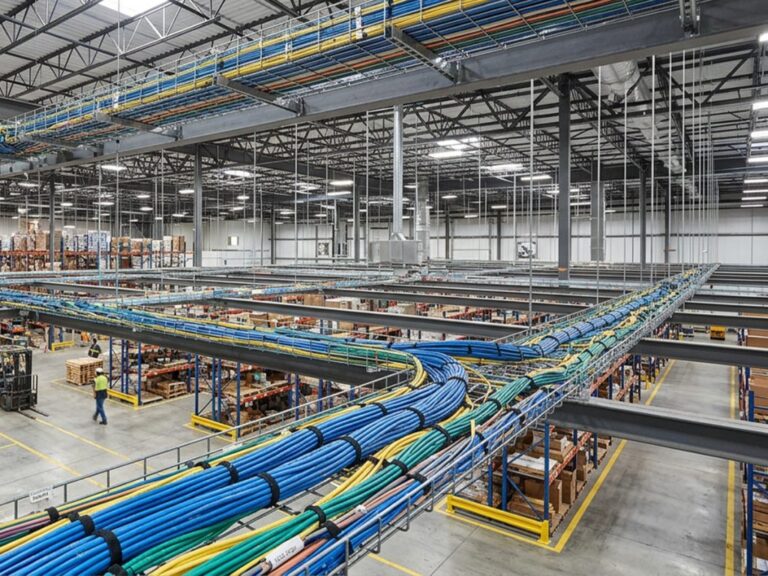
Professional installation is fundamentally different because it is based on planning, design, and long-term system behavior – not trial and error.
A properly installed system is stable from day one. It operates within correct electrical parameters, maintains signal integrity, and requires minimal post-installation correction.
More importantly, professional design ensures proper load balancing and system structure. This prevents issues like voltage drops, unstable performance, or premature equipment wear.
Compliance is another key factor. Systems built according to National Fire Protection Association standards are not only safer but also more reliable in inspections and long-term use.
Ultimately, professional installation reduces the likelihood of failure and significantly lowers long-term maintenance needs.
Real-World Scenarios: DIY vs Professional Work
In smart home systems, DIY installations often begin with normal functionality but gradually develop issues such as delayed responses or disconnected devices. These problems usually stem from inconsistent wiring or improper load handling.
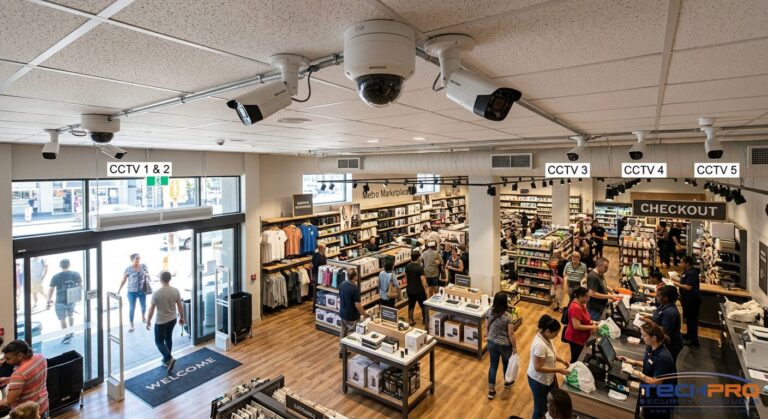
Security camera systems show similar patterns. Cameras may work initially but later suffer from signal loss or power instability, especially when wiring quality is inconsistent.
HVAC control systems are even more sensitive. Small wiring mistakes can cause communication failures between components, leading to inefficient operation or system cycling issues.
In all cases, the pattern is the same: DIY may reduce initial cost, but professional systems deliver long-term stability and lower total cost of ownership.
When DIY Makes Sense (and When It Doesn’t)
DIY can be reasonable for small, isolated tasks such as replacing a single cable or reconnecting a simple device.
However, once systems become interconnected or critical to security, comfort, or automation, complexity increases significantly. At that point, proper design and diagnostic capability become essential.
Knowing when to stop DIY efforts is often what prevents unnecessary long-term costs.
Expert Insight: Why Prevention Is Cheaper Than Repair
The most cost-effective approach to low voltage systems is always prevention.
Professional planning ensures that systems are designed correctly from the start, reducing the likelihood of future failures. When installation is structured properly, the need for troubleshooting, rewiring, or emergency repair decreases dramatically.
This is why structured low voltage wiring cost planning is not just an engineering practice – it is a financial strategy.
DIY low voltage wiring may appear cost-effective at the beginning, but real-world experience consistently shows that long-term expenses often exceed professional installation costs.
When factors like repairs, system instability, and equipment replacement are considered, the initial savings quickly disappear.
Professional installation offers a different outcome: stability, compliance, and predictable performance over time.
For complex or interconnected systems, choosing expert installation is not just a technical decision – it is a long-term investment in reliability and cost control.
FAQ
Is DIY low voltage wiring actually cheaper?
It can seem cheaper at first, but hidden repair costs, troubleshooting, and rework often make the total low voltage wiring cost higher than professional installation.
What are the biggest risks of DIY low voltage wiring?
The main risks include unstable connections, equipment damage, and electrical safety risks, especially when systems are installed without proper testing or design.
Why do DIY low voltage systems fail over time?
Most failures come from poor cable routing, loose terminations, or incorrect load handling, which lead to gradual system instability and signal loss.
Can I test low voltage wiring myself?
Yes, basic checks like continuity and voltage measurement can be done with a multimeter, but accurate circuit diagnostics often require professional tools and experience.
When should I hire a professional instead of DIY?
If the system is complex, interconnected, or part of security, HVAC, or smart home infrastructure, professional installation is the safer and more reliable choice.
What are the benefits of professional installation?
Professional work ensures system reliability, code compliance, and fewer long-term failures, reducing maintenance and overall lifetime costs.
Does low voltage wiring still require safety standards?
Yes. Even low voltage systems must follow NEC guidelines to ensure safe installation and prevent future system issues.