In today’s fast-paced business environment, reliable connectivity isn’t just a convenience – it’s essential. Every email sent, video conference held, or cloud application accessed relies on a network capable of supporting a growing company. Even brief downtime can result in lost productivity, missed opportunities, and frustrated employees or clients.
Investing in commercial voice and data cabling is more than a technical upgrade – it’s a strategic choice that ensures scalability, consistent uptime, and measurable ROI. Partnering with experts in data cabling services ensures networks are fast, reliable, and ready to support business growth today and in the future.
Whether expanding your office, upgrading IT infrastructure, or preparing for new technology deployments, a solid cabling foundation is the backbone of business success, enabling seamless data transfer and efficient communication systems.
Why Modern Businesses Depend on Reliable Network Infrastructure
Modern businesses rely on an ecosystem of cloud applications, VoIP phone systems, and hybrid work environments. Maintaining high-performance connectivity is critical: when networks falter, productivity suffers, costs rise, and customer satisfaction declines.
According to Gartner, IT downtime can cost companies an average of $5,600 per minute, with losses rising among enterprises that are heavily dependent on digital systems.
This is where business network cabling and structured cabling systems play a crucial role. A thoughtfully designed and professionally installed infrastructure prevents costly outages, supports rapid data movement, and lays the groundwork for future technology adoption. Reliable cabling keeps your network operational during critical moments, making professional installation an essential investment to U.S. businesses.
What Is Commercial Voice and Data Cabling?
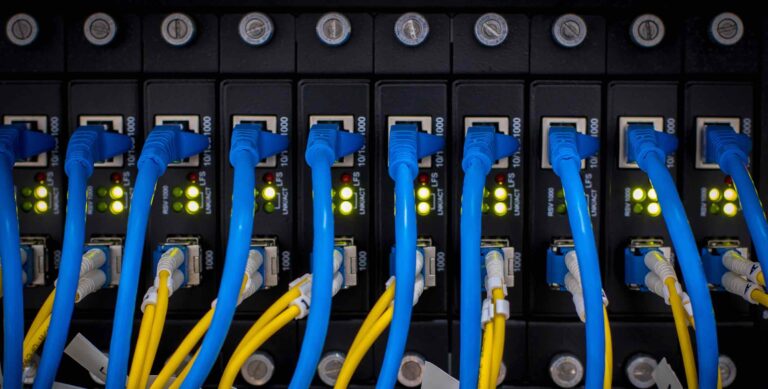
Commercial voice and data cabling is the physical infrastructure connecting your office’s communication and data systems. From internet connections and voice lines to networked security systems, this cabling ensures information flows efficiently across your organization.
Key components include:
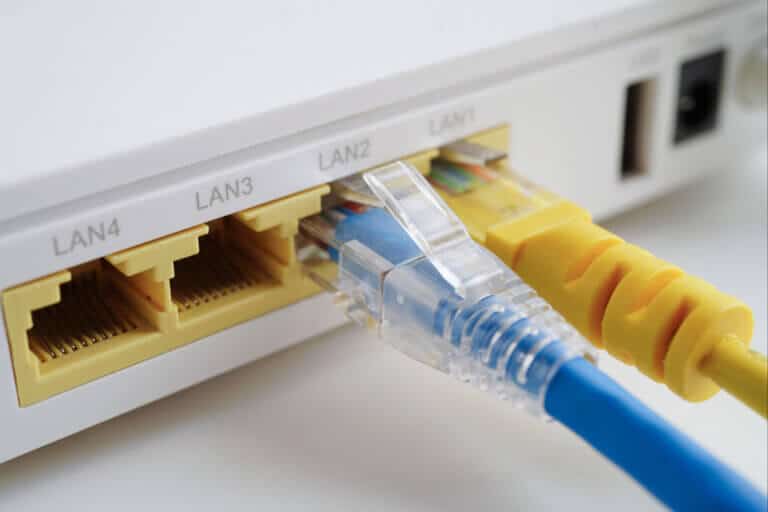
- Cat5e – Standard office networks providing reliable performance in general business applications.
- Cat6 / Cat6a – Higher-speed cables supporting data-intensive applications and enabling scalable network growth.
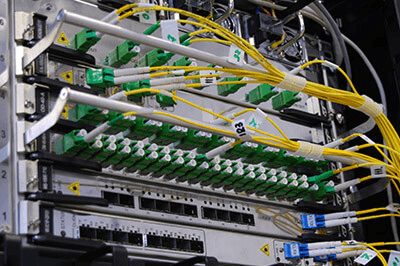
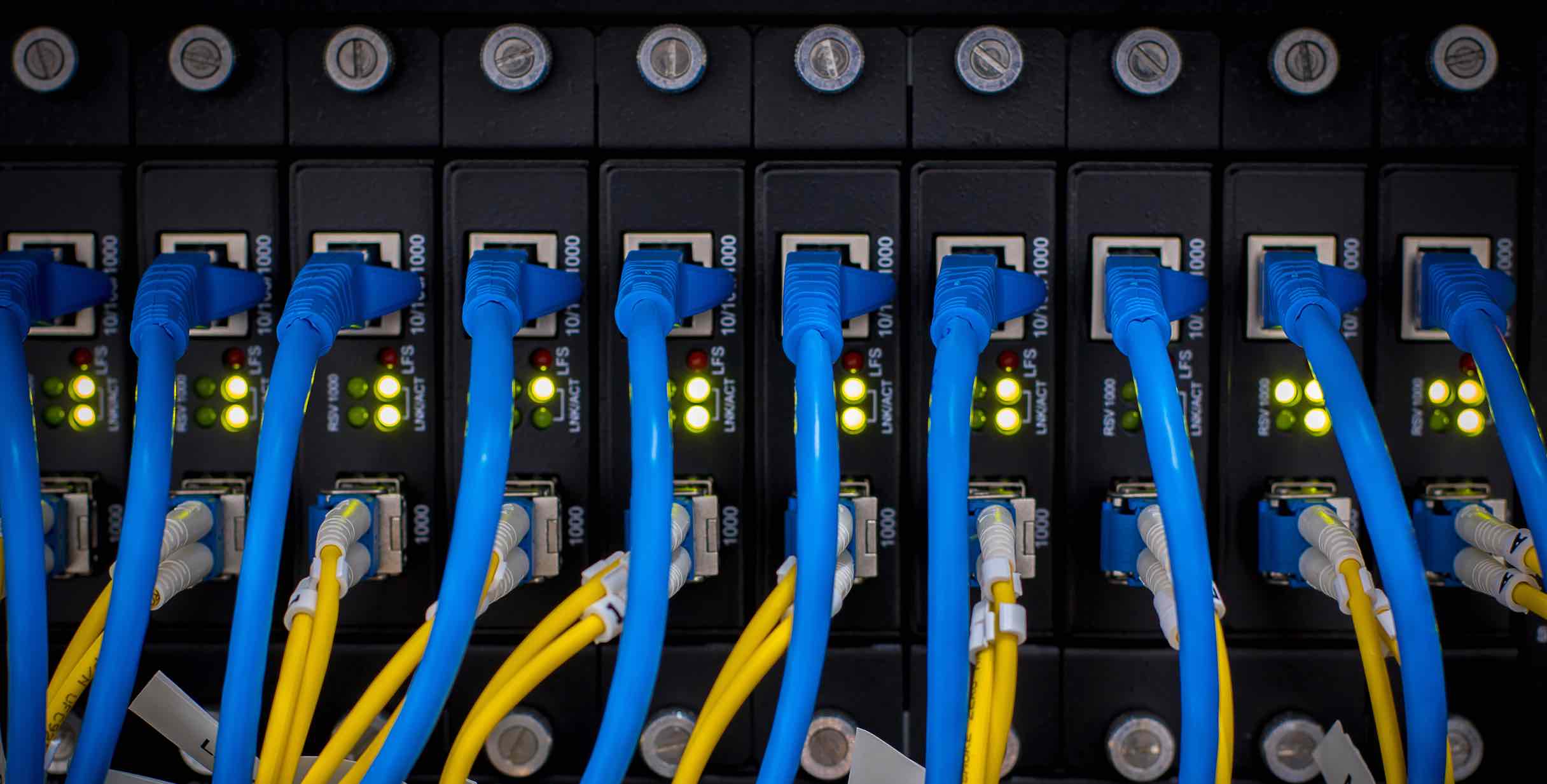
- Fiber optic – Ideal in high-speed, long-distance connections, often used as backbone or inter-building links.
Hardware such as racks, patch panels, and cable management systems keeps installations organized, simplifies maintenance, and improves performance. Partnering with professionals providing office cabling services ensures every element is reliable, scalable, and compliant with industry standards, preparing networks for future upgrades.
Structured Cabling Systems: The Backbone of Scalable Networks
Structured cabling systems are a standardized method for designing and installing a building’s communication infrastructure. Unlike point-to-point wiring, structured systems organize all voice, data, and video connections into a cohesive, layered architecture.
Benefits of Structured Cabling Systems
- Scalability: Add users, devices, or new technologies without major rework.
- Easier Maintenance: Centralized labeling reduces troubleshooting time and network downtime.
- Performance Optimization: Consistent cabling practices ensure reliable, high-speed connectivity.
Key Components
- Horizontal Cabling: Connects workstations to telecom rooms using standard runs.
- Backbone Cabling: Links floors or buildings to form the network core.
- Work Area Components: Outlets, patch panels, and connectors.
- Telecom Rooms: Centralized spaces for racks, switches, and patch panels.
| Feature | Structured Cabling Systems | Traditional Cabling |
| Scalability | High | Low |
| Maintenance | Easy | Complex |
| Cost Over Time | Lower | Higher |
Following TIA/EIA standards ensures high-performance, safe, and future-proof installations.
Types of Data Cabling Services for Businesses
Professional data cabling services provide the foundation of reliable office networks. Many U.S. businesses rely on office cabling services to handle installation, maintenance, and compliance with standards.
Ethernet Cabling Installation
- Cat6 / Cat6a cables for high-speed connectivity
- Support for larger teams and devices
- Compatibility with modern network equipment
Fiber Optic Cabling
- Ultra-fast transmission for bandwidth-heavy applications
- Reliable performance over long distances
- Minimal signal interference
Voice Cabling Solutions
- Clear VoIP communication
- Easy integration with data networks
- Preparedness for future telecommunication needs
Combining data cabling services with voice solutions creates a unified, high-performance network.
Benefits of Professional Office Cabling Services
Investing in office cabling services delivers more than neat installations – it reduces downtime, supports growth, and ensures compliance with U.S. standards like BICSI.
Key Advantages
- Better Network Performance: Faster, more reliable connectivity
- Clean Cable Management: Easier troubleshooting and maintenance
- Improved Security: Better control over physical and digital access
Professional cabling combined with business network cabling ensures networks are efficient today and scalable tomorrow.
Choosing the Right Commercial Cabling Partner
Selecting a provider for commercial voice and data cabling ensures a reliable, scalable network.
What to Look For
- Certifications: BICSI, OSHA
- Experience: Proven expertise with U.S. businesses
- Warranty & Support: Materials and labor coverage
Questions to Ask Providers
- Do you follow TIA/EIA standards?
- Do you offer scalable solutions?
Trusted providers of office cabling services ensure long-term network efficiency and peace of mind.
Cost of Commercial Voice and Data Cabling
Costs vary depending on building size, cable type, and labor.
| Service Type | Avg Cost (US) |
| Cat6 Installation | $100-$200 per drop |
| Fiber Cabling | $1,000+ depending on distance |
Investing in structured cabling systems may cost more upfront, but long-term benefits like scalability and maintenance efficiency make it worthwhile.
Future Trends in Office Cabling and Network Infrastructure
Modern office cabling services go beyond connecting devices – they enable smart buildings, IoT integration, and faster 5G/fiber networks.
- Smart Buildings: Networked lighting, HVAC, and security systems
- IoT Integration: Connected devices enhance efficiency without slowing critical applications
- 5G & Fiber Expansion: Higher speeds, lower latency, and future-ready networks
Structured cabling prepares businesses to adopt new technologies without costly overhauls.
Invest in Reliable Cabling for Long-Term Business Success
Professional commercial voice and data cabling is a strategic investment. Partnering with experts in data cabling services ensures reduced downtime, improved performance, and a scalable foundation for future growth.
DIGICO provides businesses in Los Angeles with:
- Comprehensive consultation
- Detailed audit of current infrastructure
- Professional installation of high-quality cabling systems
Take the first step toward a reliable, future-proof network today.
FAQ
What is commercial voice and data cabling?
It’s the physical infrastructure that connects your office’s voice, internet, data, and security systems, ensuring reliable communication and network performance.
Why are structured cabling systems important?
Structured cabling organizes all connections into a standardized system, improving scalability, maintenance, and network reliability.
What types of data cabling services do you offer?
Services include Ethernet (Cat6/Cat6a) installation, fiber optic cabling, and voice cabling solutions for high-speed, secure office networks.
How does professional office cabling benefit my business?
It reduces downtime, improves network speed, supports growth, and ensures compliance with U.S. standards like BICSI.
How do I choose the right cabling partner?
Look for certified, experienced providers that follow TIA/EIA standards, offer warranties, and deliver scalable solutions.
What is the cost of commercial voice and data cabling?
Costs vary by building size, cable type, and labor. Cat6 drops average $100-$200, while fiber installations start around $1,000.