
When business owners think about office security, cameras are often the first thing that comes to mind. More cameras, better coverage, stronger protection – at least on the surface. But in 2026, this approach is no longer enough. True office surveillance isn’t just about devices; it’s about a well-designed infrastructure that works as a single, reliable system.
Commercial crime remains a real concern across the United States. According to the FBI Uniform Crime Reports, a significant share of non-residential property crimes occur in office buildings and commercial facilities. Statista also reports that businesses face losses not only from break-ins but also from internal incidents such as unauthorized access, theft, and data breaches. These risks make modern office security a business necessity, not an optional upgrade.
Yet many businesses invest heavily in cameras but overlook what actually makes them effective. Poor or outdated wiring, insufficient bandwidth, and improperly planned cabling can quietly undermine even the most advanced systems. Video feeds freeze, recordings fail, and blind spots appear – often at the worst possible moment.
Even the best cameras fail without proper wiring.
Modern office surveillance must be approached holistically. Cameras, network infrastructure, power delivery, and cabling all play a critical role in keeping your workplace secure, compliant, and scalable. Without a strong foundation, security becomes reactive instead of reliable, leaving businesses with a false sense of protection.
What Modern Office Security Really Includes
Effective office security solutions are no longer built around a single layer of protection. Security must be designed as a connected ecosystem, where every component supports the others. Cameras alone cannot provide complete protection without the systems behind them working in harmony.
Video Surveillance Systems
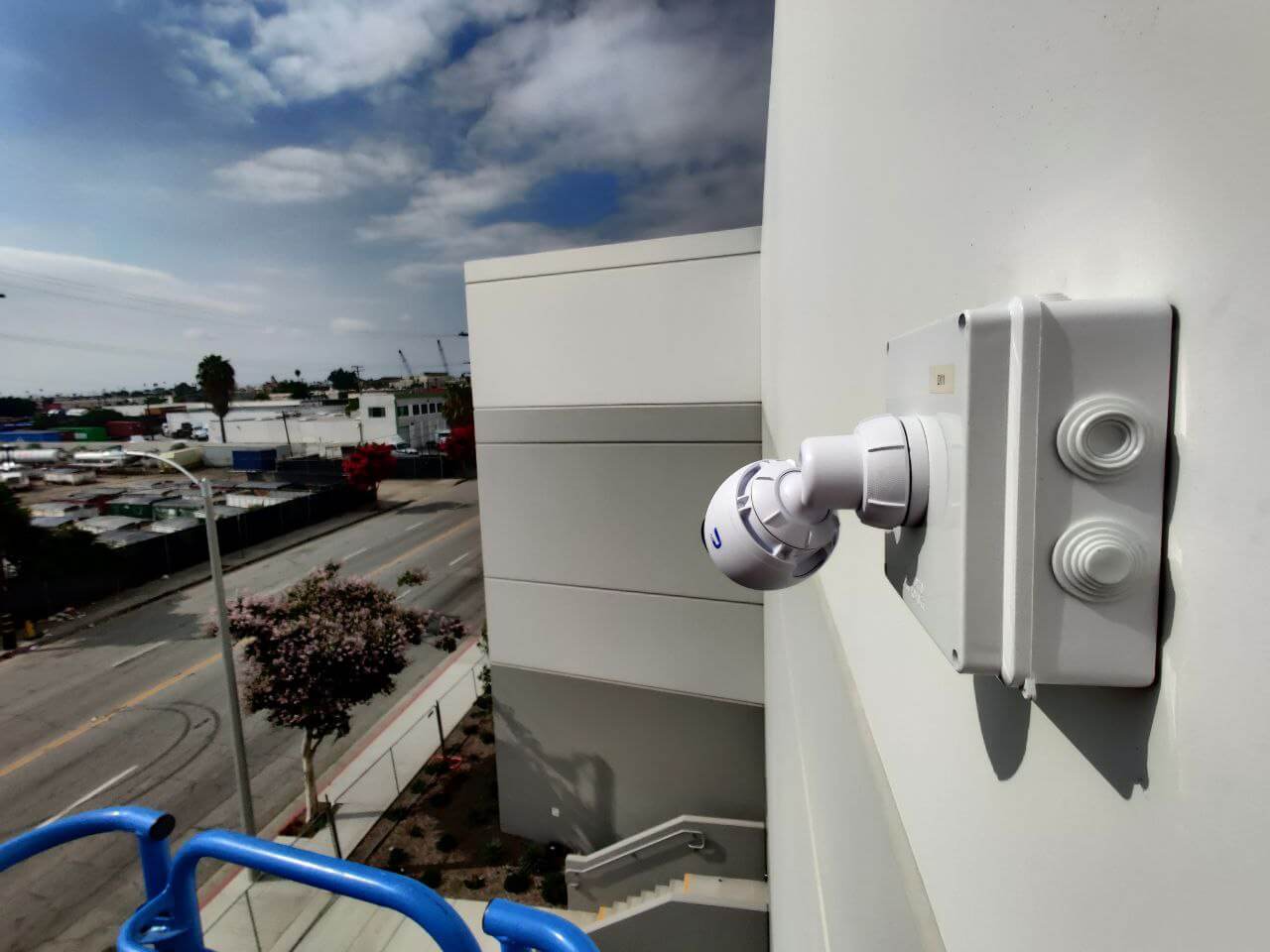
Video surveillance remains a cornerstone of office security, providing real-time visibility, recorded evidence, and deterrence. Today’s systems go far beyond basic cameras. High-resolution video, remote access, analytics, and cloud or on-premise storage all rely on a stable network. Without proper wiring and bandwidth, even advanced surveillance becomes unreliable.
Access Control & Entry Management
Modern offices need more than locks and keys. Access control systems – including keycards, fobs, mobile credentials, and biometrics – regulate who can enter specific areas and when. These systems protect employees, sensitive data, and physical assets while generating audit trails for compliance. Like surveillance, access control relies heavily on structured wiring for uninterrupted operation.
Alarm and Monitoring Systems
Alarms and monitoring systems detect unauthorized entry, after-hours movement, or system tampering. Integrated properly, they work alongside cameras and access control to trigger alerts in real time. Effectiveness depends on dependable cabling and power – gaps can delay alerts or prevent systems from communicating during critical events.
Network & Low-Voltage Infrastructure
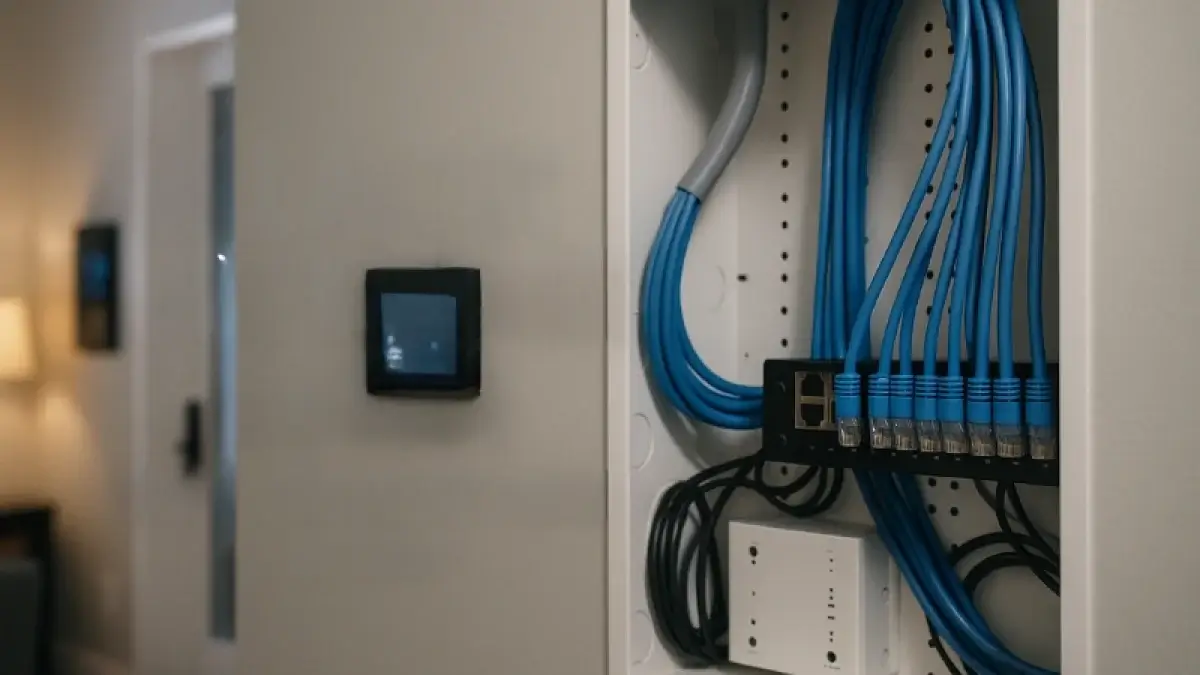
This is the backbone connecting all components. Network and low-voltage infrastructure supports cameras, access panels, alarms, and monitoring platforms. Proper security system cabling ensures consistent power, clean data transmission, and room for future expansion. Without it, the entire security system suffers.
Modern office security solutions only work when all components are connected through a well-designed cabling foundation.
Office Surveillance Starts With the Right Infrastructure
Effective office surveillance begins behind the scenes, with the infrastructure that supports it. Every camera is a data-driven device, capturing and transmitting large volumes of video 24/7. Without a solid foundation, even high-end hardware cannot perform reliably.
Poor security system cabling leads to:
- Video quality degradation from signal loss or bandwidth issues
- Unstable recordings, including dropped frames or missing footage
- Limited scalability, making future expansions costly
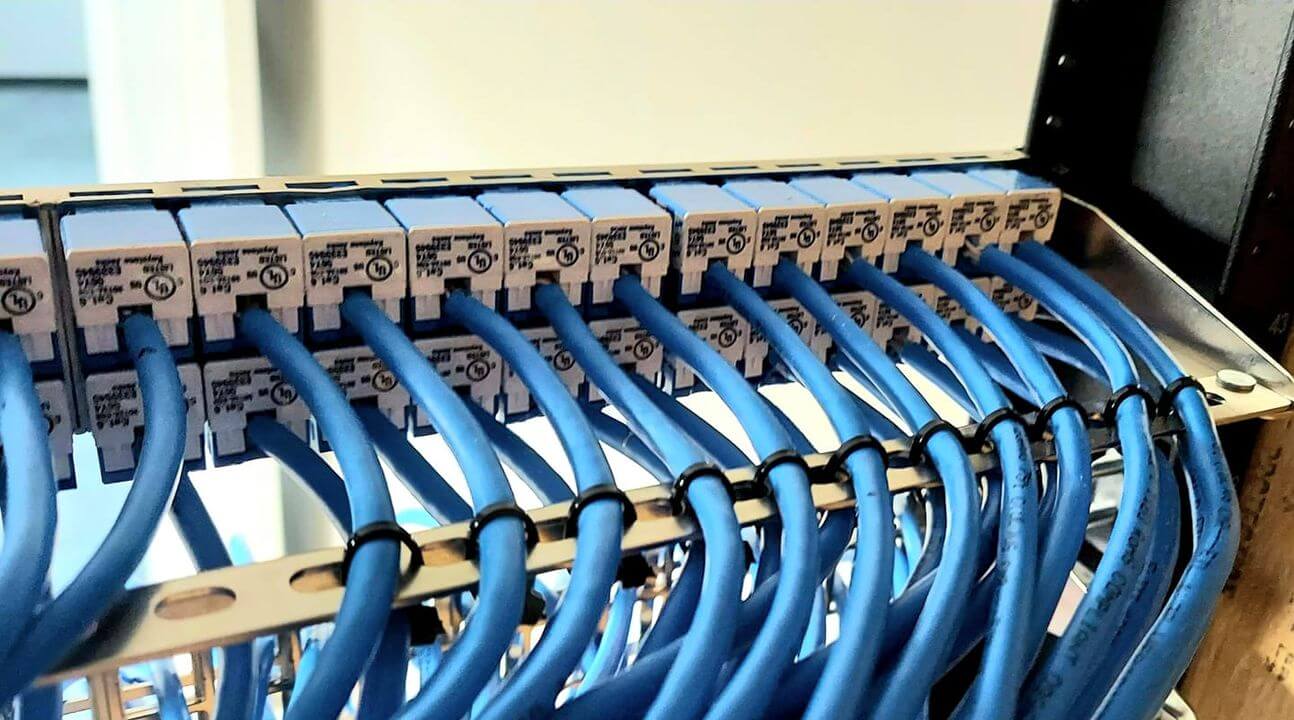
Structured cabling is critical. Properly planned infrastructure supports high data loads, delivers reliable Power over Ethernet (PoE), and maintains performance as your business grows. In well-secured offices, wiring and cameras are never treated as separate projects; the cabling forms the backbone of a unified surveillance system.
Why Surveillance System Installation Fails Without Proper Wiring
A professional surveillance system installation is only as strong as the wiring supporting it. Improper or rushed security camera wiring is one of the main reasons commercial systems fail.
Key risks of poor wiring:
- Signal Loss & Latency: Inadequate cabling can cause delayed feeds, pixelation, or dropped connections.
- Power Failures (PoE issues): Cameras may experience intermittent power or shutdowns if cables aren’t rated correctly.
- Downtime During Critical Incidents: Security systems must work when everything else goes wrong. Poor wiring can leave cameras offline during break-ins or internal threats.
- Costly Rework: Fixing inadequate wiring after installation disrupts operations and drives up costs.
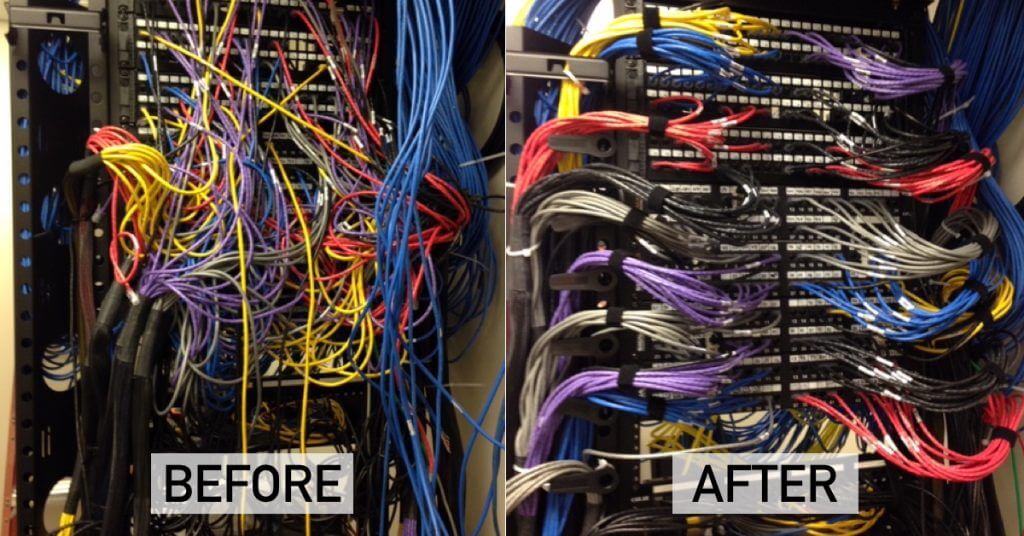
| Proper Wiring | Poor Wiring |
| Stable video feed | Intermittent signal |
| Scalable system | Limited expansion |
| Clean installation | Exposed cables |
| Long-term reliability | Frequent maintenance |
Professional planning ensures that wiring supports current and future needs, protecting your investment and your business.
Security Camera Wiring: The Most Overlooked Risk
Security camera wiring is often invisible – yet it’s one of the most critical elements of office security. Residential standards cannot support commercial surveillance’s continuous operation, high data loads, and future scalability.
Commercial installations prioritize:
- Cat6 / Cat6A cabling for higher bandwidth and longer runs
- Proper PoE standards to deliver consistent power
- Code compliance (NEC) for safety and insurance coverage
DIY or inexperienced installation often results in exposed cables, improper grounding, and systems that can’t scale. DIGICO’s expertise ensures wiring is installed correctly, creating a reliable, compliant foundation for office security.
How Integrated Cabling Improves Office Security Long-Term
Integrated cabling transforms office security from a reactive expense into a proactive business asset. According to the Security Industry Association (SIA), many companies upgrade or expand systems every 3-5 years. Proper cabling simplifies these upgrades and supports long-term reliability.
Benefits include:
- Easier System Upgrades: Add devices or increase capacity without major construction.
- Better Compliance & Insurance Positioning: NEC-compliant cabling reduces risk and supports audits.
- Reduced Operational Risk: Stable data and power minimize downtime and false alarms.
- Centralized Monitoring: Unified infrastructure enables clearer oversight and faster response.
Choosing the Right Partner for Surveillance & Wiring
A successful surveillance system installation requires expertise in both cameras and wiring. Choosing a single contractor for both ensures compatibility, reliability, and long-term performance.
Questions to ask potential partners:
- Do you design cabling specifically for commercial surveillance?
- Can the wiring support future expansion and high-resolution cameras?
- Are installations NEC-compliant?
- What experience do you have in multi-tenant or complex commercial environments?
Experience and certifications matter. DIGICO delivers integrated solutions that combine design, cabling, and installation for optimal results.
Why Businesses in Los Angeles Trust DIGICO
For over 17 years, Los Angeles businesses have relied on DIGICO for complete office security solutions. Our expertise in commercial low-voltage environments allows us to handle complex office layouts, multi-tenant buildings, and strict compliance requirements.
Our end-to-end approach includes:
- Design based on risk assessment and operational needs
- Wiring built to commercial standards for scalability
- Installation executed cleanly, efficiently, and in compliance with NEC
This integrated approach ensures reliable office surveillance, long-term system performance, and peace of mind for business owners.
Office Security Works Best as One System
True office security isn’t about installing more cameras or layering technology without planning. The most effective systems are cohesive infrastructures where surveillance, cabling, access control, and monitoring work together seamlessly.
Investing in an integrated approach ensures reliability, scalability, and reduced operational risk. To strengthen your security, schedule a professional assessment and upgrade your office security infrastructure with a system built to perform today and adapt for the future.
FAQ
What is included in modern office security solutions?
Modern office security solutions include video surveillance, access control, alarms, and structured network and low-voltage infrastructure to ensure reliable operation.
Why is proper security camera wiring important?
Proper security camera wiring ensures stable video feeds, consistent power delivery, and scalability for future system upgrades.
Can I just install more cameras to improve office surveillance?
No. Effective office surveillance requires a cohesive infrastructure where cameras, cabling, and network systems work together.
What happens if surveillance system installation is done incorrectly?
Poor installation can cause signal loss, power failures, downtime, and expensive rework, reducing the overall effectiveness of your security system.
How often should businesses upgrade their security systems?
According to the Security Industry Association (SIA), many businesses upgrade or expand their security systems every 3-5 years to support new technology.
Why should I choose one contractor for cameras and wiring?
A single contractor ensures compatibility, reduces installation errors, and guarantees that your surveillance and cabling work together seamlessly.
What makes DIGICO a trusted choice for office security in Los Angeles?
DIGICO offers 17+ years of commercial low-voltage expertise, end-to-end design, wiring, and installation, focusing on reliability and compliance.